How to Improve CTR in SEO: My Search Console Method

Quick answer: To improve CTR in SEO, find pages in Google Search Console that get impressions but few clicks, then make their title and meta description more specific and more clickable. Check that the page really matches the search intent, and fix keyword cannibalisation. Don’t use CTR booster bots. They send fake traffic, which goes against Google’s spam policies.
I’m Shiva Prasad, an SEO professional in Hyderabad. Most of my client work is real estate. This is the process I actually use when a page’s CTR drops, including a recent real example.
What is CTR in SEO?
Click-through rate (CTR) is the percentage of people who saw your page in Google and clicked it:
CTR = (clicks ÷ impressions) × 100
Example: 30 clicks from 1,000 impressions is a 3% CTR. Search Console calculates this for you, for every page and every query.
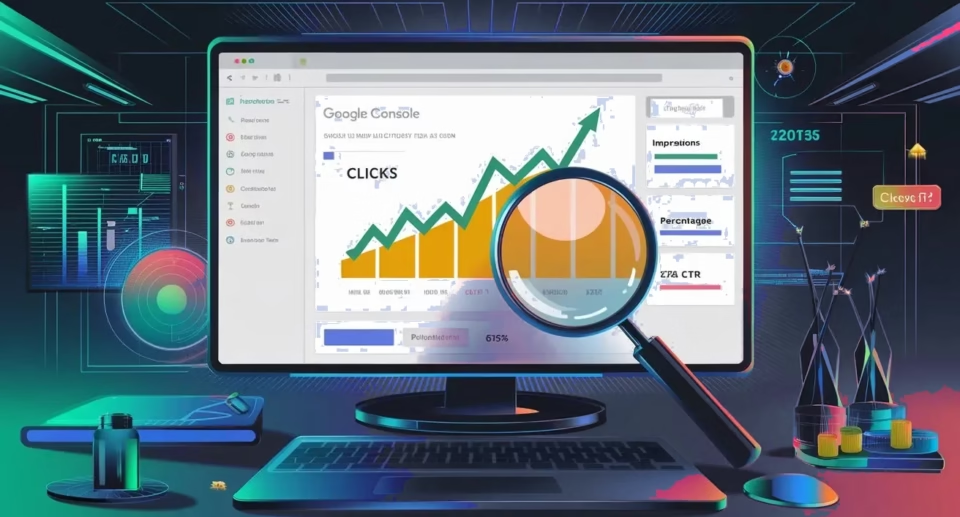
Step 1: find low-CTR pages in Search Console
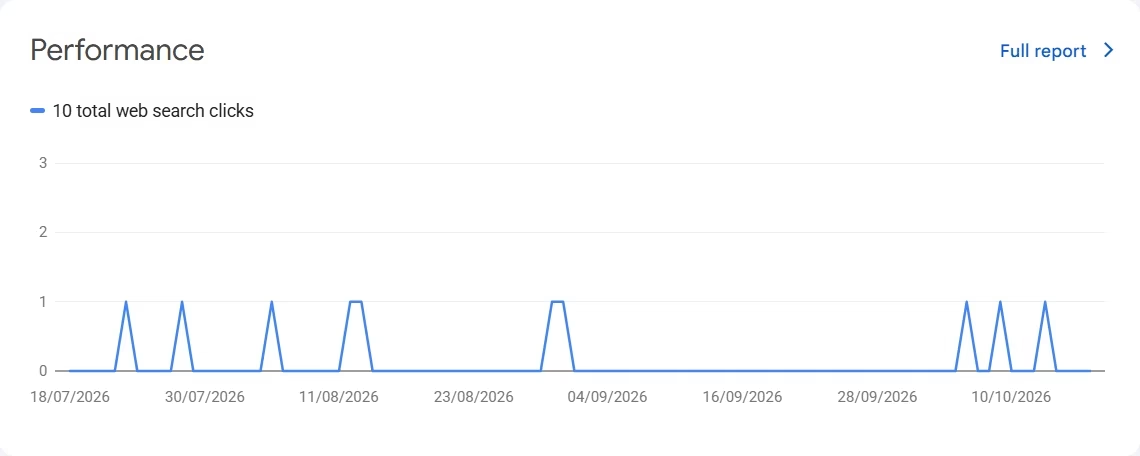
This is my routine:
- Open Performance > Search results.
- Turn on all four metrics: clicks, impressions, CTR and average position.
- Set the date filter to Compare, last month against this month.
- Open the Pages tab and go through each blog and service page. Where did CTR drop?
- For every page that dropped, look for the reason: an indexing change, the page not loading properly, a technical issue, or a change in what Google shows for that query.
A quicker trick: in the Pages tab, sort by impressions. Then look for pages in positions 1–10 that have high impressions but low CTR. People already see these pages and still don’t click, so a better title often brings the fastest gain.
New to Search Console? See our guide to Search Console clicks and using Search Console for SEO.

Step 2: work out why CTR is low
I check these four causes, in this order:
- The title isn’t clickable. It’s vague, too long, or looks like every other result.
- The page doesn’t match the intent. If people want a price and your page is a general overview, they’ll click a competitor.
- Keyword cannibalisation. If two or three of your pages target the same query, Google can’t tell which one to show. They can all end up with weak positions and low CTR. Give each query one page.
- AI Overviews and other features. For many questions, Google’s AI Overview answers the searcher directly, so even a top-five result can get fewer clicks. You can’t remove the AI Overview, but you can try to be the source it uses.
Step 3: rewrite the title
I don’t believe in one fixed title formula. A list post, a comparison and a project page need different titles, and every industry is different. These are the four checks I use on every title:
- Primary keyword near the start.
- A number when it’s a list, such as “Top 10” or “7 ways”, and only when the page really is a list.
- A reason to click: some emotion or a clear benefit, such as “free”, “step-by-step” or “honest comparison”.
- A specific detail people want: for real estate, that’s the price or the BHK configuration. Specific beats generic.
Keep the title honest. Google may rewrite title links that are inaccurate, repetitive or don’t match the page. A clickbait title that the page doesn’t deliver on also loses the visitor straight away. Preview your title with our free SERP Snippet Preview.
Step 4: improve the meta description
Google mostly builds snippets from the page content, and uses your meta description when it describes the page better. So write a description that summarises the page accurately and includes the detail the searcher is looking for. Our Meta Tag Generator can help with this.
A real example: getting the official price into Google
This is a recent case from a luxury real estate client. I won’t name the project.
- The problem: the project has an official website, and a channel partner (CP) also has a site for it. The CP’s meta description included the starting price. The official site’s didn’t. When I searched for the project’s starting price, Google’s AI Overview took the price from the CP’s site, not the official one.
- What I changed: on the official project page, I added the official price to the meta description. On the official blog about the project, I updated the meta description and the title with the price and the configuration (4 BHK / 5 BHK).
- Why: when someone asks for the project’s price, the answer, the trust and the click should go to the official site, not a third party.
- Result: these changes are recent, so I’m still waiting for Google to reflect them. I’ll update this post when I can see the effect in Search Console.
Lesson: if a detail matters to searchers, like price, size or location, put it clearly on the page itself, not only in the meta tags. AI Overviews and snippets mostly draw on page content, so the meta description alone isn’t enough.
Do CTR booster tools work?
To be honest, I’ve never used a CTR booster tool, and I don’t plan to. These tools use bots or paid clickers to search your keyword and click your result, so it looks like people prefer your page.
Google’s spam policies list “machine-generated traffic”, meaning automated queries sent to Google, as a violation. Fake clicks also don’t fix the real problem: a title people don’t want to click, or a page that doesn’t answer the search. Even if a bot made your CTR look higher for a while, the real visitors who arrive would still leave.

The method that lasts is the one above: find the pages in Search Console, find out why CTR dropped, and fix the title, the description and the content. That needs solid on-page SEO and some technical SEO knowledge, not a tool.
After you make changes
- Request indexing for the page in Search Console’s URL Inspection.
- Write down the date and what you changed.
- After 3–4 weeks, compare CTR and position with the period before the change. Change one thing at a time so you know what worked.
FAQs
What is a good CTR in SEO?
There’s no single number. CTR depends heavily on your position, the type of query and the features Google shows, like AI Overviews and ads. Compare a page with its own past CTR and with your other pages at similar positions.
Why are my impressions high but clicks low?
Usually the page ranks too low to be seen (check the average position), the title isn’t compelling, the page doesn’t match the intent, or an AI Overview answers the question directly.
Does changing the meta description improve CTR?
It can, if Google shows your description and it gives searchers a better reason to click. Google sometimes builds its own snippet from your page content instead, so the page content matters too.
How long does it take to see CTR changes?
Google needs to recrawl the page first. I check after 3–4 weeks, and pages with few impressions take longer to show a clear trend.
Are CTR manipulation tools safe?
No. Sending automated traffic to Google goes against its spam policies, and it doesn’t fix why real people aren’t clicking.