
Digital Marketing with AI in 2026: The Complete Beginner’s Playbook

Digital marketing with AI is no longer a skill reserved for big agencies or tech-savvy professionals. In 2026, it is the single most important shift happening in how brands attract customers, create content, and grow online. Whether you run a small business, want to earn money online, or are just starting to learn marketing, this guide gives you a clear, honest, step-by-step picture of how AI is reshaping digital marketing and exactly what you should do about it.
Why 2026 Is the Most Important Year for AI-Powered Marketing
According to data compiled from Semrush, HubSpot, and Social Media Examiner, 67% of small and medium-sized businesses now use AI in marketing, 60% of marketers use AI tools daily, and 83% of companies consider AI a top priority. Between 2024 and 2025, AI adoption among SMBs jumped from 39% to 55% — a 41% year-over-year increase. Businesses report an average 70% increase in ROI from AI-powered marketing.
Part 1: AI and Content Marketing
The Content Creation Workflow with AI
Companies using AI now publish 42% more content each month, and 93% of marketers use AI to generate content faster. Here is a practical workflow:
- Research and topic discovery — Use Perplexity AI or ChatGPT to identify trending questions in your niche.
- Outline generation — Prompt your AI chatbot with the topic, target audience, and primary keyword.
- First draft — Use the outline as input to generate a first draft. Review and rewrite heavily.
- Fact-checking and personalization — Add real data, examples from your own experience, and original insight.
- SEO optimization — Use tools like Surfer SEO or RankMath to check keyword placement and structure.
- Publishing and repurposing — A single blog post can be repurposed into social posts, email newsletters, and video scripts using AI.
Part 2: AI-Powered SEO and the Rise of GEO
What Is GEO: Generative Engine Optimization?
GEO (Generative Engine Optimization) is the practice of optimizing your content so that AI-powered search platforms — ChatGPT, Google AI Overviews, Perplexity, Gemini — can retrieve and cite your content when answering user questions. If traditional SEO was about earning a spot among 10 blue links, GEO is about earning a place among the two to seven domains that large language models typically cite in a single response.
Nearly 800 million people a week use ChatGPT alone to answer questions and plan next steps. AI-powered search features have already reduced organic traffic by 15–64% across various content categories. In 2026, you must optimize for both traditional search and AI answers.
How to Optimize for GEO: 6 Actionable Steps
- Write for real questions — Structure your headings as questions (“How does X work?”). Generative engines look for content that directly answers what people are asking.
- Implement Schema Markup — Use Article, FAQ, HowTo, and Breadcrumb schema. RankMath for WordPress adds schema automatically.
- Build E-E-A-T Signals — Publish original research, cite reliable sources, and maintain author bio pages demonstrating real expertise.
- Go beyond your website — LLMs cite content from Reddit, YouTube, Wikipedia, G2, and LinkedIn. Build a presence on these platforms.
- Keep content fresh — AI engines weigh recency. Refresh cornerstone content regularly with updated data and a clear “Last updated” timestamp.
- Check AI crawlers are not blocked — Ensure GPTBot, ClaudeBot, and PerplexityBot are not blocked in your robots.txt file.
Part 3: AI for Paid Advertising
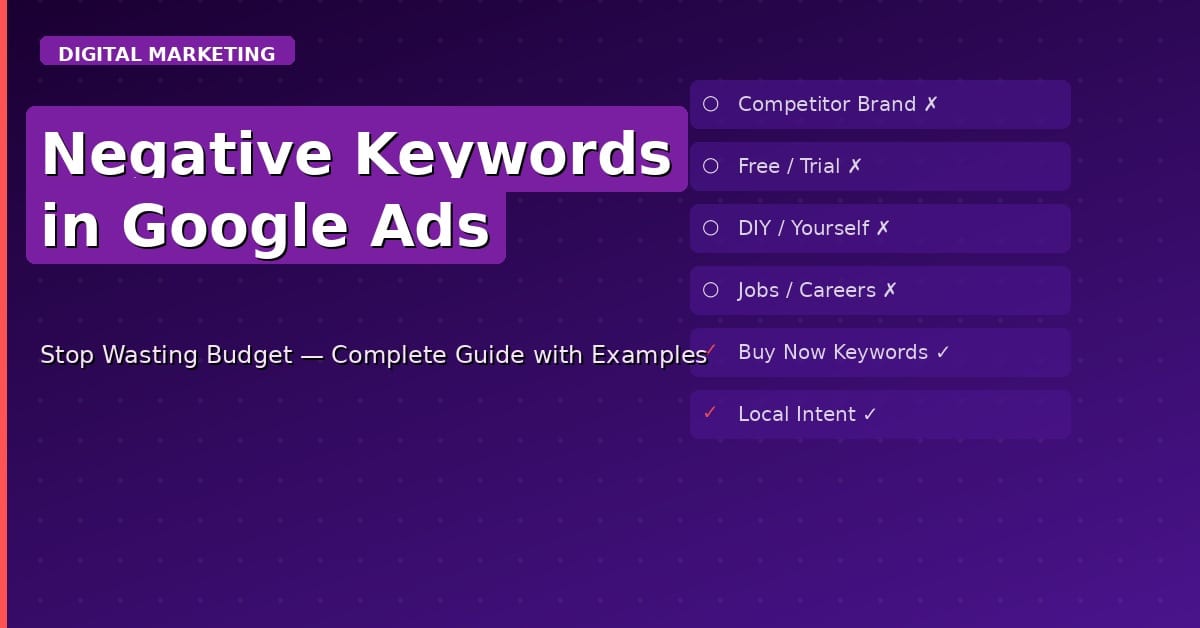
AI-powered PPC bid management reduces wasted ad spend by 37% while increasing ad ROI by 50%. AI copywriting tools improve click-through rates by 38% while reducing cost-per-click by 32%.
What Beginners Should Focus on for AI-Powered Ads
- Feed the algorithm quality data — Set up conversion tracking in Google Analytics 4 (GA4) before launching campaigns.
- Use broad match with Smart Bidding — Google’s AI performs better with broader targeting paired with Target CPA or Target ROAS strategies.
- Test creative variations — Provide 3–5 headline variations, different images, and multiple descriptions.
- Review, do not micromanage — AI-powered campaigns need 2–4 weeks to exit the learning phase. Frequent changes reset the learning process.
86% of marketers have already seen AI outputs that resemble competitor content. Always customize AI-generated ad copy to reflect your specific brand voice and unique value proposition.
Part 4: AI for Email Marketing
- Subject line optimization — Tools like HubSpot and Mailchimp AI suggest subject lines based on what performs best for your audience.
- Send-time optimization — Predictive send-time optimization can increase email open rates by more than 150%.
- Personalization at scale — AI dynamically changes email content based on subscriber behavior, location, or purchase history.
- AI-drafted campaigns — HubSpot’s AI Content Assistant can draft full email sequences from a brief campaign goal description.
AI-driven campaigns can increase email open rates by up to 41%, and 75% of US marketers report that AI saves organizational costs.
Part 5: AI and Social Media Marketing
The most practical use of AI for social media is content repurposing. A single well-written blog post can become:
- 5–7 social media posts (Twitter/X threads, LinkedIn posts, Instagram captions)
- A short-form video script for YouTube Shorts or Instagram Reels
- An email newsletter introduction
- A carousel post with key takeaways
Write the core content yourself first — with original insight and genuine expertise — then use AI to efficiently distribute versions of it across channels.
Part 6: AI Marketing Analytics
For beginners, the most practical analytics tools are:
- Google Analytics 4 (GA4) — Free, with built-in AI predictive metrics including purchase probability, churn probability, and revenue prediction.
- Google Looker Studio — Free dashboard tool connecting GA4 and Search Console into visual reports without code.
- Semrush — For competitive SEO research, including GEO monitoring to track how your brand appears in AI-generated answers.
The AI Digital Marketing Stack for Beginners
| Marketing Function | Recommended Tool | Cost |
|---|---|---|
| Content writing and research | ChatGPT or Claude | Free |
| AI search and fact-checking | Perplexity AI | Free |
| SEO and GEO optimization | RankMath (WordPress) | Free |
| Email marketing with AI | Mailchimp (AI features) | Free tier |
| Analytics | Google Analytics 4 | Free |
Common Mistakes Beginners Make with AI Marketing
- Publishing AI content without editing — AI drafts are a starting point. Add original expertise and insight before hitting publish.
- Ignoring GEO — AI-powered search features have already reduced organic traffic significantly. Optimize for AI answers, not just blue links.
- Using too many tools — Marketing technology utilization has dropped to just 33%. Choose fewer tools and use them deeply.
- Skipping analytics setup — Without proper tracking in GA4, the algorithms have nothing to optimize toward.
- Treating AI as a strategy — AI accelerates execution. It does not replace strategy. Always define your goal and audience first.
Frequently Asked Questions
Is digital marketing with AI suitable for complete beginners?
Yes. ChatGPT, Gemini, Mailchimp, and RankMath all have free plans, are well-documented, and require no technical background. Start with content creation and SEO, then gradually add paid advertising and analytics.
What is GEO and how is it different from SEO?
Traditional SEO optimizes for Google’s list of search results. GEO (Generative Engine Optimization) optimizes for citations in AI-generated answers from ChatGPT, Perplexity, and Google AI Overviews. In 2026, you need both. Good SEO supports GEO — but GEO requires additional steps like schema markup, FAQ formatting, and building presence on platforms AI tools cite frequently.
How much does it cost to start digital marketing with AI?
You can build a complete beginner AI marketing stack for free — ChatGPT, Perplexity, RankMath, Mailchimp’s free tier, and Google Analytics 4 are all available at no cost. Paid tools like Semrush become worthwhile once you are producing content consistently and want deeper competitive data.
Does Google penalize AI-generated content?
Google evaluates content on quality, usefulness, and relevance — not on how it was created. Thin, unedited AI content that provides no original value is likely to rank poorly. Use AI as a drafting assistant while adding original expertise before publishing.
Can I do AI marketing in Telugu for an Indian audience?
Yes. ChatGPT and Google Gemini both support Telugu-language content. Gemini tends to handle Indian languages with more nuance. Consider writing bilingual articles (Telugu summary plus English full post) to capture both audiences in search.
What is the single most important AI marketing skill in 2026?
Prompt engineering — the ability to give AI tools clear, specific, well-structured instructions. The quality of your AI output is directly proportional to the quality of your instructions.
Conclusion: The Opportunity Is Right Now
Digital marketing with AI in 2026 is not about hype — it is about a fundamental shift in how customers discover information, how brands create content, and how campaigns are optimized. The tools are free, the learning curve is manageable, and the playing field has not been this level in a long time.
Start with the basics: set up GA4, publish useful content, optimize for GEO, and build your email list. Use AI to do those fundamentals faster and more consistently than you could alone. Then build from there.
💡 Want weekly AI marketing strategies, tool reviews, and step-by-step tutorials delivered straight to your inbox? Subscribe to the AIContentHive newsletter — free, practical, and built for Telugu and English readers learning digital marketing with AI. Explore more guides at aicontenthive.com.


